October 19, 2026
A well-made handwoven basket is a working object, and it shows. Willow softens at the rim where hands lift it. Seagrass darkens where fruit sat a day too long. Rattan sags when a heavy load stays in it for months. None of that means the basket is finished. Most of what people blame on age is really damp, dust and steady pressure, and all three are within your control. Care takes a few minutes a couple of times a year, plus quick attention when something spills. What follows is how to give a basket the treatment that suits its fibres, so it holds its shape and stays useful far longer than the trend that brought it home.
Start With the Material, Not the Method
Before you wipe, wash or spray anything, work out what you are holding. A tight willow log basket and a soft cotton rope hamper need opposite treatment, and a technique that rescues one will ruin the other.
Willow, oak and ash splint are woody fibres. They are springy when sound and brittle when over-dry. They can be dampened slightly to bend, but repeated soaking loosens the weave and invites mould into the gaps. Keep them dry and dust them with a brush.
Rattan and cane are more forgiving. They tolerate a wipe with a barely damp cloth, provided they dry completely afterwards. Cane webbing on chair seats and lids is the first part to suffer if moisture lingers.
Seagrass, water hyacinth and maize leaf are coarse, absorbent and quick to mildew. They should never be soaked. A dry brush and an occasional light wipe are enough.
Bamboo prefers a dry cloth and good airflow. Cotton rope and fabric-lined baskets are often the exception: many rope baskets can be washed, and most liners can be removed and laundered. Check with the maker if you are unsure, especially on dyed rope where colour may bleed.
Dust Does Most of the Damage, and Takes Two Minutes
Dust is not just untidy. It holds moisture against the fibres and gives insects somewhere to settle. In a kitchen or porch, a basket can collect a visible film within a month.
Empty the basket, turn it upside down and tap the base. Then run a soft brush along the weave: a clean paintbrush for tight rattan, a shoe brush or stiff-bristled brush for coarse seagrass. A vacuum on low suction with a brush attachment works well on sturdy baskets, but keep the nozzle moving and never press it into the weave. Do this monthly in busy rooms, and twice a year for baskets that mostly decorate.
Deep Cleaning Without Soaking
When a basket needs more than dusting, work in stages and stop as soon as the mark lifts.
- Empty it completely and take it outside. Shake out crumbs, sand and pet hair, then tap the base on a hard surface to loosen debris caught in the bottom weave.
- Brush the whole basket, inside and out, including the underside where dust gathers unseen.
- For sticky marks, dampen a cloth with lukewarm water and a single drop of mild washing-up liquid. Wring it until it is barely damp, then wipe along the weave rather than across it, so you do not lift strands.
- Rinse the cloth in clean water, wring it again, and wipe the same area to remove soap residue.
- For musty smells or light mildew, wipe with a cloth dampened with diluted white vinegar, then let the basket air dry completely. Vinegar helps on the surface; it will not fix fibres that are already rotting, and any basket that stays damp will grow mildew again.
Three things to avoid: never submerge a woven basket, never put it in a dishwasher, and never hose it down in the garden. Water swells the fibres, loosens the weave and sits in the base long after the surface feels dry. A short spell in direct sun can help kill mildew spores on a dry day, but hours of strong sun will bleach colour and crack woody fibres.
Drying Is Where Baskets Are Won or Lost
Almost every basket problem, from a musty smell to a soft, weak base, comes back to moisture that never left. Dry baskets in moving air, in shade or indirect light, raised off the ground so air reaches the underside. A folding drying rack, a couple of bricks, or an upturned crate all work. Turn the basket once or twice so the base and rim dry evenly.
Keep it away from radiators, ovens and hot air vents. Fast heat dries the outer strands before the inner ones, which is how splits and loose rims begin. On a humid day, a fan in the same room does more good than any amount of warmth. Allow a full day, and two in wet weather.
A basket that feels dry on the outside can still be damp in the base and handle, where the weave is thickest. Give it another day before you fill it again.
Reshaping a Basket That Has Sagged
Sagging usually comes from a heavy load left in place, damp storage, or something stacked on top for months. It is often reversible.
Empty the basket and check that the base is sound; a soft, crumbling base is a moisture problem, not a shaping one. Lightly mist the outside with water from a spray bottle, using a fine mist and only on rattan, seagrass or willow. Work from the inside, pushing the walls back into line with your palms, and support the shape while it dries. A bowl, a plant pot, a box or rolled towels inserted inside will hold a round or oval form; screwed-up newspaper packed gently into corners does the same for square baskets.
Straighten bent handles with steady, gentle pressure rather than force, and only when the fibre is slightly flexible. Woody strands crack when dry, so if a handle resists, mist it and wait ten minutes before trying again. Let the basket dry in shape somewhere airy, then remove the support.
Storing Baskets Without Squashing Them
- Store baskets empty. Whatever you leave inside for a season will press the weave out of shape.
- Nest only baskets made to nest, and slip a cloth between them so rims and handles do not rub.
- Hang from a handle only if the basket is light and the handle is firmly woven in. Otherwise hang by the body or stand the basket on a shelf.
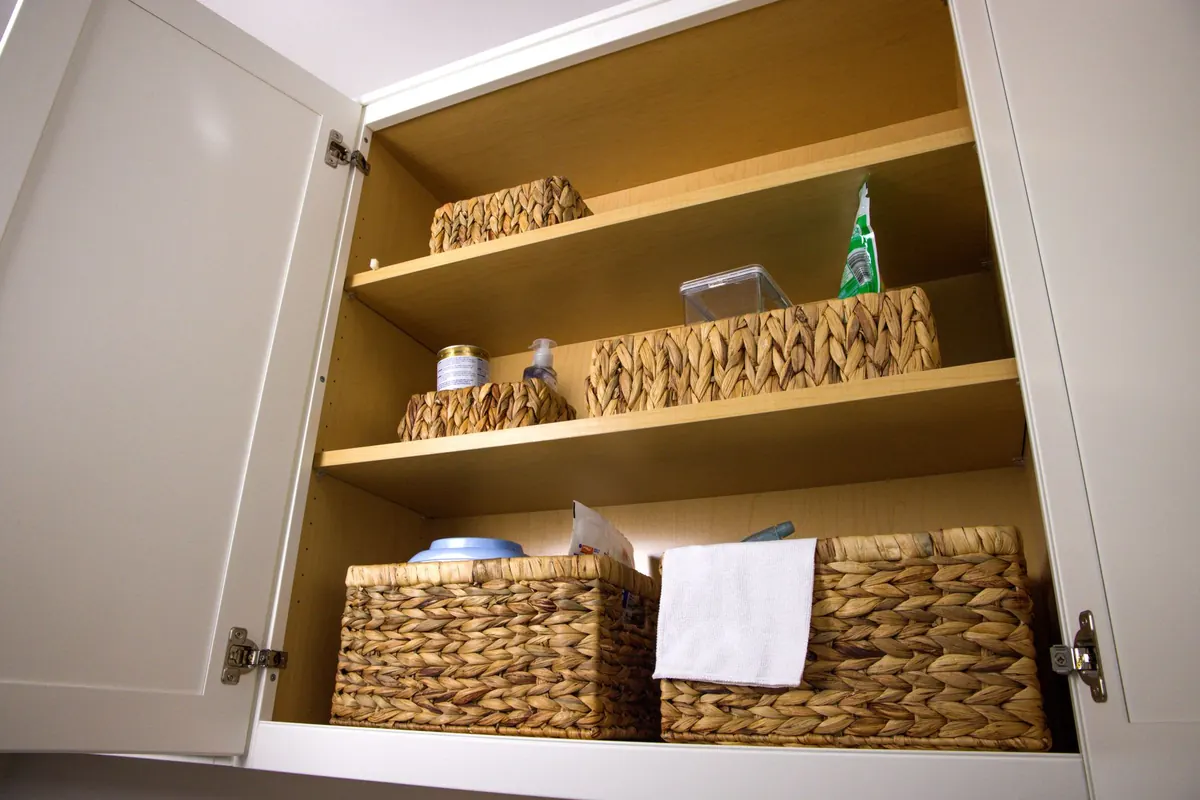
- Keep baskets off concrete and stone floors, which draw moisture up through the base. A wooden shelf or a top cupboard is better.
- Skip plastic bags, which trap damp air. A cotton pillowcase or a dust sheet protects against dirt while letting the basket breathe.
- Use cedar blocks or lavender sachets against insects, and keep mothballs away from baskets that will hold food or linens.
- Avoid cellars, garages, bathrooms and anywhere that feels cold and clammy to the touch.
A Small Routine That Pays Off
Twice a year, at the start of spring and autumn, empty every basket in the house, dust it, and look closely at the rim, handle and base. Press the weave with your thumb: it should feel firm, not spongy. Check for mildew spots, loose strands and splits, and deal with them while they are small. A minor break can often be tucked back into the weave with a blunt needle; structural damage to a good basket is worth taking to a basketmaker rather than fixing with glue and wire.
If a basket is precious, or you bought it from a specific maker, ask them before treating a stain. They know the fibre, the finish and how it is likely to behave, and that advice is worth more than any general rule. Looked after this way, a handwoven basket does what it was made to do: it takes the weight, the dust and the daily use, and still looks like something worth keeping.